Created by Jamie Clark for LIS 404
Introduction
My search strategy started with reviewing the graphic novel, comic and manga titles I was already familiar with to determine which, if any, met my theme. I found that I had a few manga titles to choose from, but no comics or graphic novels that I had heard of. I then turned my search to Google using the phrases “fairy tale graphic novels” and “folklore graphic novels.” Both search terms led me to Amazon.ca book lists on this very topic that I searched through to get some idea of what was available and where I might need to refine my search.
The primary modification I had to make in my search was restricting the age to 12+ in order to weed out picture books and simple illustrated retellings of classic fairy tales. Fortunately, Amazon makes this relatively easy if you restrict your searches to a certain genre. I also made use of recommendations based on titles I selected -- these often led me to other great options. I also checked out publisher websites and news and review sites. My first selected title, Fables, actually led me to several others through researching reviews, publication history, and related materials.
I did not have trouble finding ten titles, though I did have some difficulty with the ‘after 2007’ criteria as a large number of titles in this area have been published in the 2000s but few very recently. The publication history seems to be within the last two decades, with prevalence starting back in the early 1990s but with popularity increasing within the last ten years. I would characterize the availability as abundant, though the diversity within what is available is somewhat limited. What I mean is that there are a lot of the same stories, like Red Riding Hood or Goldilocks, which are used and reused. Each one is re-imagined and unique but essentially you are reading a familiar story.
In order to bring a bit of diversity to this bibliography, I expanded my criteria to consider a few texts that are based on mythology or mythology-like tales or folklore. I did this mainly because I wanted to include titles that base their material on something other than Western fairy tales in order to include a more culturally diverse selection. I also believe many other cultures treat the stories of their myths and legends in the same vein as we view fairy tales thus making them suitable candidates.
I chose more recently published titles for my list so that they have a higher likelihood of being available to those wishing to find them. Access to most of the texts in my list is easy, as they are available through retailers either online or in person. Some, like The Missing White Dragon, may be harder to find for purchase but there are often resources online to find them, including buying them through auction websites like eBay.
Annotated Bibliography

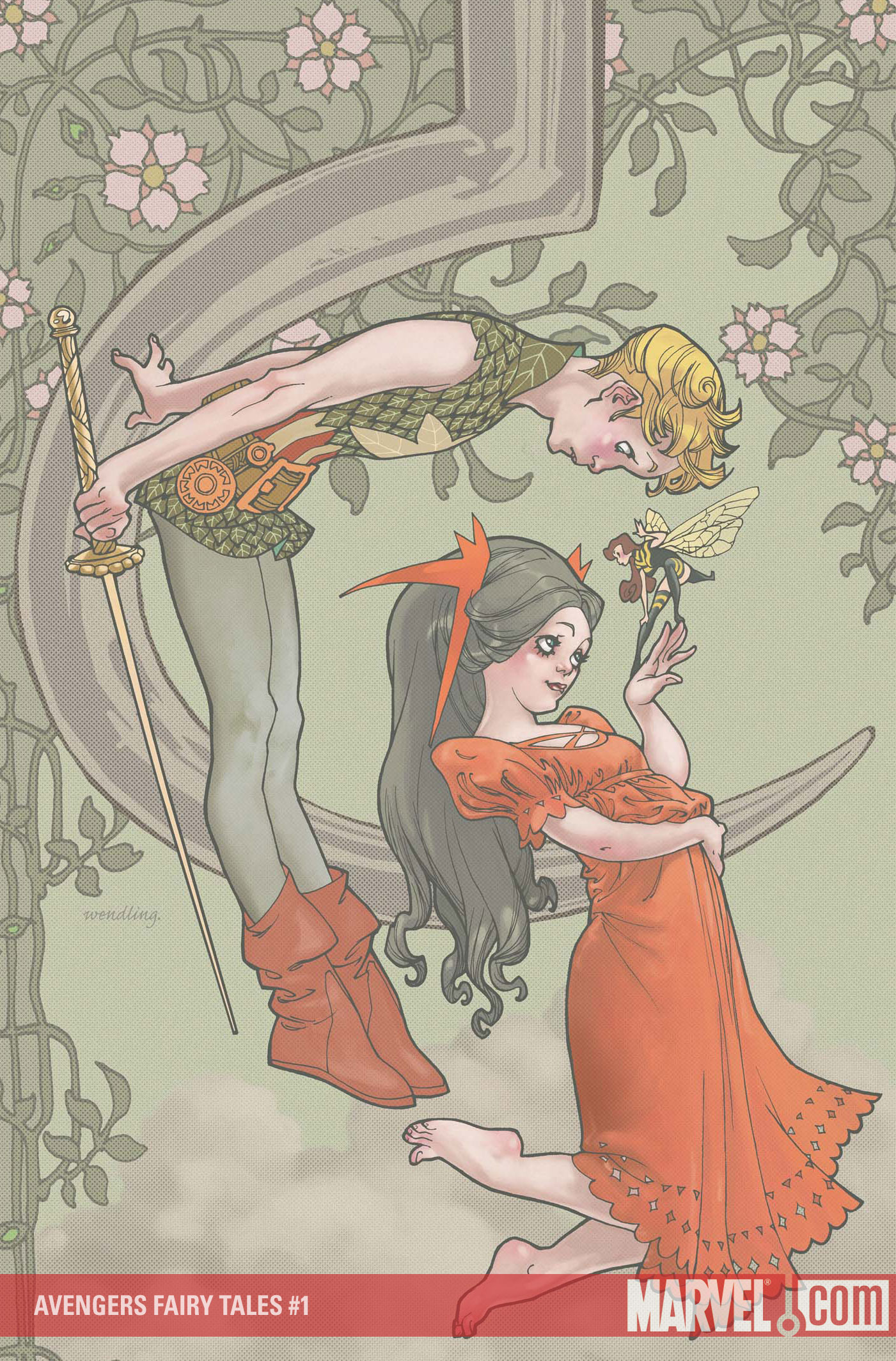
Cebulski, C. B. (2010). Marvel fairy tales. New York, NY: Marvel Publishing Inc.

Cebulski is a writer and editor in the Marvel universe of comics who has taken iconic superheroes and combined them with folklore and fairy tales from around the world. In this volume, the cast of The Avengers, original and new, are transformed into the characters of tales like Peter Pan, and Pinocchio. As well, there are two additional stories from two other collections in the same theme -- Spider-Man features in a Little Red Riding Hood-inspired tale, while Xavier and Magneto of the X-Men feature in an African story.
The artwork varies from story to story, moving from traditional comic book art and line work to more stylized or painting-like graphics to match the mood of the tale. For example, “The Friendship of the Tortoise and the Eagle” has a style much like crayon art class drawings to match its straightforward narrative. Alternatively, “Alice in Wonderland” is much more detailed to reflect the complex world first imagined by Lewis Carroll.

This collection helps bridge the gap between traditional fairy tales and the superhero world of comic books. In turn, both sides are enriched as the heroes’ traits redefine their folkloric counterparts and vice versa. Each hero is chosen with careful consideration and fans will appreciate each assigned role. It also makes these iconic characters accessible to newcomers as the bulk of character history has no bearing on these one-shot narratives. Stories from other cultures are introduced using familiar faces, making them more approachable and relevant to readers.
Interview:
Rogers, V. (n.d.). CB Cebulski on avengers fairy tales. Retrieved November 18, 2010, from http://forum.newsarama.com/showthread.php?t=142853
Reviews:
As this volume collects issues Avengers Fairy Tales, Spider-Man Fairy Tales, and X-Men Fairy Tales issues, the reviews I found are for some of the separate issues, rather than the collection as a whole.
Flanagan, Steve. (3 June 2007). Reviews: Action comics, gutsville, spider-man fairy tales. Retrieved November 18, 2010, from http://gadsircomics.blogspot.com/2007/06/
reviews-action-comics-gutsville-spider.html
Sunde, E. (12 March 2008). Avengers fairy tales #1 review: Peter Pan hits earth’s mightiest. Retrieved November 18, 2010, from http://comics.ign.com/articles/859/859209p1.html

Dasgupta, S., Chopra, D. & Kapur, S. (2007). Ramayan 3392 A.D. 3 vols. New York, NY: Virgin Comics.
Dasgupta recreates the Indian epic of the Ramayana by setting it in the distant future. Deepak Chopra, in the front of the first issue, describes the story as “timeless” with “themes [that] continue to give meaning to life, create a cultural mindset, [and] forge an idealist vision to which to aspire.” It is a story that contains many fairy tale elements including the power of love and triumph over tragic circumstances.

The art is expressionistic with great stylistic backgrounds. Images are softened by a lack of outlining; detail is present in overlays of colors that show where light hits a necklace or the grooves in the vast, futuristic architecture and technology that permeate the world. There is a modernizing of the epic tale that brings it into the world of science fiction and fantasy.
Reviews:
L., B. (10 Oct 2006). Ramayan 3392 AD #1. Retrieved November 21, 2010, from http://www.comicsbulletin.com/reviews/116049868241264.htm
Valentinelli, M. (27 June 2008). Ramayan 3392 AD graphic novel review. Retrieved November 21, 2010, from http://www.flamesrising.com/review-of-ramayan-3392a/

Perhaps part of the recent trend of adding vampires to classic stories, Higgens and Jensen extend the story of Pinocchio to include the slaying of the blood-sucking undead using his still-growing nose. The comic helpfully recaps the original story by Carlo Collodi then resumes the story in the middle of the puppet’s quest to kill vampires. Geppetto is dead, the Blue Fairy is old and tired, and the helpful cricket is a ghost. There also seems to be a prophecy surrounding Pinocchio...

The story is a great balance between seriousness and humour and as a result the book is entertaining without being silly. The original tale is honoured while being expanded on and the characters are given more depth with having to deal with age and the loss of loved ones. Add to this that Pinocchio remains a wooden puppet instead of a real boy and the whole town does not believe him about the vampire threat, and you have a tragic and emotional story with sardonic humour to relieve some of the tension. It is a modernized fairy tale that will engage readers who do not mind vampire slaying, the odd hanging, and homes in flames.

Artistically, the comic is dark as there is a heavy use of black ink throughout, from backgrounds to the characters. This keeps with the mood and the story as bright panels or colours would feel out of place. The style is more iconic than realistic but reads well, with everything clear and identifiable to the reader.

Artistically, the comic is dark as there is a heavy use of black ink throughout, from backgrounds to the characters. This keeps with the mood and the story as bright panels or colours would feel out of place. The style is more iconic than realistic but reads well, with everything clear and identifiable to the reader.
Reviews:
May, M. (20 Jan 2010). Gorillas riding dinosaurs: Pinocchio, vampire slayer. Retrieved Nov 21, 2010, from http://robot6.comicbookresources.com/2010/01/
gorillas-riding-dinosaurs-pinocchio-vampire-slayer/
[Review of the book Pinocchio: Vampire slayer]. (31 Oct 2010). Retrieved Nov 21, 2010, from http://comicbuzz.com/pinocchio-vampire-slayer-vol-1-review

Minekura, K. (2004). Saiyuki. 9 vols. Los Angeles, CA: Tokyopop.
May, M. (20 Jan 2010). Gorillas riding dinosaurs: Pinocchio, vampire slayer. Retrieved Nov 21, 2010, from http://robot6.comicbookresources.com/2010/01/
gorillas-riding-dinosaurs-pinocchio-vampire-slayer/
[Review of the book Pinocchio: Vampire slayer]. (31 Oct 2010). Retrieved Nov 21, 2010, from http://comicbuzz.com/pinocchio-vampire-slayer-vol-1-review

Saiyuki reinterprets the classical Chinese novel Journey to the West which describes a monk’s pilgrimage to India in search of Buddhist scriptures, along with three disciples who act as his protectors to atone for past sins. Included among them is the Monkey King. This story has been used numerous times, including the graphic novel American Born Chinese which includes back story on the Monkey King and his joining the monk’s travels.
This shonen manga transforms the story into one of action-adventure as the four protagonists -- monk Sanzo, man-turned-demon Hakkai, half-demon Gojyo, and monkey king Goku -- set out to recover Buddhist scrolls and stop the revival of a powerful demon king whose resurgence has caused all other demons to go mad. The story includes a lot of fighting in typical shonen fashion but includes great storytelling in the form of the tragic pasts of each character and their adamant determination to move on and live the lives they want. The story has a nice balance between the serious and the silly as the main characters maintain a sense of humour about their mission and each other throughout though do take their task to heart.

Reviews:
I had trouble finding legitimate reviews as most of what I came across were very informal fan reviews of the series. The closest I could find was a copy of a review, without link to the original source. I could not find the original source in my own research, either. Also included is an anime review for much of what is said can apply to the manga as well.
Gensomaden saiyuki reviews. (n.d.). Retrieved November 18, 2010, from http://www.saiyuki.com/reviews.php
Saiyuki review. (12 Dec 2006). Retrieved November 18, 2010, from
http://www.anime-planet.com/reviews/a264.html

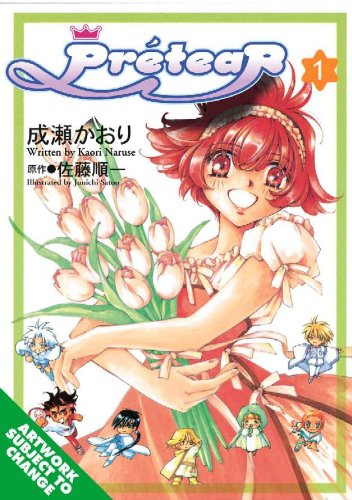
 Prétear takes the fairy tale of Snow White and transforms it into a magical girl shojo manga story with elements of other, similar tales, like Cinderella. Himeno’s father is a widower but has recently remarried a rich divorcée who has two daughters of her own. She struggles to adapt to life in a mansion and two step-siblings who do little to make her feel welcome. On top of that, she meets the Leafe Knights -- seven guys aligned to various aspects of nature sworn to stop the Princess of Disaster who threatens to suck the energy out of the natural world. With their help, she discovers her powers as the Prétear, a magical princess-like figure who bonds with the knights to unleash great power and restore the world to what it once was.
The story includes themes of family, romance, and self-identity as Himeno struggles to understand her feelings towards Hayate, one of the Knights, her grief over her mother’s absence, and her realization that a new family is not a denial of the old one she once had. The story transitions back and forth between the quest to stop the Princess of Disaster and save the world, and the personal lives of Himeno and her new family creating diverse character growth. Artistically, the drawings are light and pretty, with each Knight having a distinct look to match his element and personality. It is very straightforward to follow and requires
little work to understand transitions.
Reviews:
I actually could not find any reviews of the manga, but could find several for the anime adaptation which is similar aside from a few plot changes and character designs. I have submitted the anime reviews here for the points made can largely be applied to the manga.
Pretear review. (14 Jan 2008). Retrieved November 18, 2010, from
http://www.anime-planet.com/reviews/a416.html
Review: Pretear. (27 Sept 2007). Retrieved November 18, 2010, from http://hayatekaze.wordpress.com/2007/09/27/review/

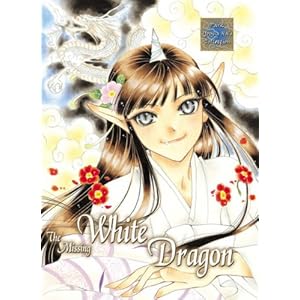
Park, Y. H. (2005). The missing white dragon. Richmond, CA: Infinity Studios.
Park’s first book is a collection of short stories based around Asian folk tales and urban legends, as well as some original stories that are presented in a similar manner. Each story features romance and love as themes but each have a different take on it. For example, the title story involves an arranged marriage while another story, “Hannya,” includes the loving bond between a brother and sister.
The stories seem geared toward a female audience with the romance theme to the book and the prevalence of females as main characters. Each one has humour to it, with the degree of silliness varying depending on the mood of the story. The art style is representative of classic manga style and most characters are drawn with elaborate clothing detail and attention to being pretty or attractive. The style remains consistent between narratives though care is given to give each one its own feel and look, to distinguish it from the others. While each story is complete, some feel a bit rushed or restricted by the short story anthology format. However, the collection as a whole is entertaining and non-threatening, making it suitable to anyone in the age range. It is reasonably accessible, with only one or two sequences that might be slightly confusing to anyone not familiar with manga.

Dungan, M. (27 Jan 2005). [Review of the book The missing white dragon]. Retrieved November 18, 2010, from http://www.mania.com/
missing-white-dragon-vol-01_article_81935.html
Lin, M. (n.d.). [Review of the book The missing white dragon]. Retrieved November 18, 2010, from http://www.animefringe.com/magazine/2005/05/review/11.php

Tyler, J. & Tedesco, R. (2006). Grimm fairy tales. Vol 1. Washington PA: Zenescope Entertainment.
The classic Grimm fairy tales are illustrated in this ongoing line of comics from Zenescope Entertainment, but they are not just reiterations. Each story has small changes, from the graphical representations of well known character Red Riding Hood from innocent girl to a mature, beautiful woman, to the context in which each story is presented. The tales are given a ‘real world’ counterpoint to set the scene, such as a girl not fitting in with her peers in “Cinderella.” The line between the fairy tale and the real world is blurred by the end of the story, leaving readers to imagine the likely gruesome fates of the characters. The interpretation of fairy tales in the stories puts them solidly within the horror genre.

The stories’ tone is dark and grim, much like the original versions of the fairy tales. In comic book form, however, this is taken to a new level with creepy monsters and sinister foreshadowing. The art is decent although the female characters have a greater degree of sexuality to them than is needed. Violence and gore are also shown in some stories, such as characters flesh melting from their bones. This may be graphic to some readers, lending this series to be intended for the older part of the young adult spectrum. In spite of this, the stories are still fun visually and story-wise although may be more popular with a male audience or fans of horror.
Luce, P. (2 Oct 2006). Book review: Grimm fairy tales, vol. 1 (trade paperback). Retrieved November 19, 2010, from http://www.monstersandcritics.com/books/comics/reviews/ article_1207290.php/Book_Review_Grimm_Fairy_Tales_Vol_1_Trade_Paperback
Uys, A. (15 April 2008). G is for Grimm fairy tales. Retrieved November 19, 2010, from http://mondomagazine.net/2008/g-is-for-grimm-fairy-tales/

Willingham’s ongoing Fables series is perhaps the quintessential comic book for folklore and fairy tale lovers and it begins with Legends in Exile. Well-known characters such as Snow White, the Big Bad Wolf, and Jack of beanstalk fame, make appearances in a story that tells how the fable characters fled their lands in the face of a terrible enemy known only as the Adversary. Now living in the mundane ‘real world,’ they must eke out a living performing regular jobs, keeping a low profile, and watching out for each others’ backs.


Artistically, Fables is drawn in the style of superhero comics with good use of colors and panel divisions. It is very easy to read graphically, and the writing and art are full of subtle and not-so-subtle references to many well-known fairy tale stories. There are some mature themes and violent content, but nothing is explicit making this series suitable for any young adult reader.
Reviews:
Cornwell, J. (8 Feb 2003). [Review of the book Fables: Legends in exile]. Retrieved November 20, 2010, from http://www.comicsbulletin.com/reviews/104474629598866.htm
Goldstein, H. (10 Aug 2006). The ten best DC comics. Retrieved November 20, 2010, from http://comics.ign.com/articles/724/724919p2.html
Messinger, J. (16 April 2003). A fabled revival. Retrieved November 20, 2010, from http://www.popmatters.com/comics/fables-legends-in-exile.shtml
Cornwell, J. (8 Feb 2003). [Review of the book Fables: Legends in exile]. Retrieved November 20, 2010, from http://www.comicsbulletin.com/reviews/104474629598866.htm
Goldstein, H. (10 Aug 2006). The ten best DC comics. Retrieved November 20, 2010, from http://comics.ign.com/articles/724/724919p2.html
Messinger, J. (16 April 2003). A fabled revival. Retrieved November 20, 2010, from http://www.popmatters.com/comics/fables-legends-in-exile.shtml

Lore is a dark and gritty tale of a secret order of humans known as the Shepherds charged with fighting against the creatures of folklore as they escape into our world. It pits government and religion against myth and legend, moving between the fighting and the dogma behind it. The series also incorporates passages of prose in the form of protagonist Jonathan Bradley’s journals which give insight into the Shepherds and the growing conflict.
The series is meant for a reasonably mature audience as there is some sexual and violent content, both artistically and story wise. Wood’s art is vague and expressionist, often leaving the impression of characters, places, and objects without the detail. This is contrast with panels drawn in a style that more closely resembles comic book art. There are few clearly established

panels as well and, as a result, the reader has to work harder to understand what is going on from page to page. This ‘gutter work’ helps as the readers own interpretations and perceptions begin to color the story, making the creatures more horrifying and the human characters more secretive. The dull colour scheme creates a depressing and oppressive tone to the story, giving strength to themes of war, loss, and progress. This title would be most suited to the older half of the young adult audience, although the younger members could still appreciate and understand the story.
Reviews:
Nearly all of the mentions I found of this online were in reference to Lore being adapted to a film, rather than a review of the books themselves.
White, G. (23 Nov 2010). Lore #1-4. Retrieved November 23, 2010, from http://www.comicworldnews.com/cgi-bin/index.cgi?column=reviews&page=152

Percival, N. (2010). Legends: The enchanted. Los Angeles, CA: Radical Books.
Nearly all of the mentions I found of this online were in reference to Lore being adapted to a film, rather than a review of the books themselves.
White, G. (23 Nov 2010). Lore #1-4. Retrieved November 23, 2010, from http://www.comicworldnews.com/cgi-bin/index.cgi?column=reviews&page=152
Critique

The premise of Legends is a dark look at some well-known fairy tale characters, much like many other titles in the same medium. However, it does not modernize them in the sense of putting them in the real, mundane world but in their concept, transforming them into science fiction steam-punk icons instead of just characters from children’s stories. Their world is similarly themed, also incorporating horror elements in the gruesome beasts that lurk in the dark and kill the unsuspecting. These individuals are not ordinary in any sense of the word.

 They are the Enchanted, figures with great power who maintain a balance between civilization’s progress and the dark, magical creatures that still inhabit the world. Jack kills giants, Red Hood kills mutant wolves, and Hansel and Gretel, psychic twins, investigate and destroy just about anything. Yet an old hag, one of the witches mentioned in any of the stories used as background for this tale, and an aspiring magistrate want to destroy the Enchanted so that they might rule the world as they see fit and so they set about to forcefully remove their supernatural powers of healing. Unfortunately for their plans, the Enchanted will not go down without a fight and can handle themselves quite well even without their magic.
Nick Percival is an artist and illustrator known for his work in the comic book, film, and video game world. He has done artwork for such notable franchises as World of Warcraft and Magic the Gathering. He created his folklore inspired work Legends: The Enchanted in order to explore the dark themes and interesting visual possibilities that the fairy tale and folklore genre possess. Percival has also mentioned in interviews that he enjoys the
reimagining of well-known icons, characters like Red Riding Hood or Goldilocks, the creatures or beasts they encounter, as well as the potential relationships they have with each other (Sunu, 2009).

Visually, Legends stands apart from much of the work done previously in this theme. Along with the post-apocalyptic world that blends nature and science, the artwork stands out with being strange and bizarre. Percival paints all of his work rather than drawing in the typical comic book or graphic novel fashion, and as a result puts in a lot of detail to each character and location. His approach includes a varied use of color and lighting, with panels often being dark but the characters or important aspects highlighted.This lends the book a very cinematic feel, like it transcends the title of graphic novel and approaches still photographs of something actually happen. Yet it would be impossible to achieve the level of detail and effect with photographs, meaning Percival balances traditional comic book elements like sound effects with his painted style.
When reading Legends, I rarely noticed the use of panels as the action flowed from one to the other quite well. Splash panels, those without defined borders, also helped this effect. As a result, the story seemed continuous rather than encapsulated in each location and the only break in this feeling coming when the scene shifted places to focus on what else was happening in the story. The dark tone is captured artfully by the dark color palette and the soft glow effect that permeates most of the artwork, as though a light shines on the characters. Fitting with the cinematic feel, a wide variety of shots are present; Percival makes use of close-ups, medium shots, long shots, and different angles as the scene requires. This greats levels of intensity of emotion, as close-ups make the readers either repulsed by hideous creatures or relatable to the protagonists by virtue of more clearly understanding their emotions.

I chose this work to evaluate because I am impressed by the artistic quality of it, as well as the steam-punk feel of blending magic, nature, and technology together to create the world. I also enjoy seeing Percival’s versions of the characters I knew from my childhood and how they fit into his story and re-imagined world. The way it feels different from the average comic book or graphic novel, that it has more value because the level of art is so high, is also appealing to me. Everything about it -- the art, character design, tone, colours, story -- immerses the reader. I would highly recommend this book to anyone who is a fan of science-fiction, fantasy, darker toned stories, or, of course, fairy tales and folklore.
Interviews with Percival:
Nick Percival talks about his steampunk fairy tale, Legends. (23 Nov 2009). Retrieved November 19, 2010, from http://www.tfaw.com/blog/2009/11/23/nick-percival-talks-about-his-steampunk-fairytale-legends/?qt=ea_LegEnchwiki1
Sunu, S. (17 Nov 2009). Nick Percival creates ‘Legends.’ Retrieved November 19, 2010, from http://www.comicbookresources.com/?page=article&id=23743
Reviews:
Cabeal, D. (30 June 2010). Legends the enchanted graphic novel. Retrieved November 19, 2010, from http://playeraffinity.com/comic-reviews/Radical-Comics-Legends-Enchanted.html
Tom. (1 July 2010). Review -- Legends: The enchanted. Retrieved November 19, 2010, from http://www.omnicomic.com/2010/07/review-legends-enchanted.html
Image Sources
Marvel Fairy Tales
First image from herorealm.com
Second image from deviantart.com
Third image is from comicsworthreading.com
Ramayan 3392 AD
First image from dancewithshadows.com
Second image from image.com
Pinocchio: Vampire Slayer
First image from comicmonsters.com
Second image from pinocchiovampireslayer.com
Third image from blogspot.com
Saiyuki
First image from amazon.com
Second image from sfolse.com
Prétear
First image from amazon.com
Second image from animea-server.net
Third image from mangafox.com
The Missing White Dragon
First image from amazon.com
Second image from mangafox.com
Grimm Fairy Tales
First image from comicmastersonline.com
Second image from photobucket.com
Fables: Legends in Exile
First image from dccomics.com
Second image from forbiddenplanet.co.uk
Third images from graphicclassroom.com
Lore
First image from idwpublishing.com
Second image from screenrant.com
Legends: The Enchanted
First image from wikipedia.com
Second image from news-gate.info
Third image from comicsbulletin.com
Fourth image from comicsbulletin.com
Fifth image from screenrant.com